
📈 UK National Minimum Wage Increases from 1 April 2026
Each year the UK Government updates minimum wage rates to help protect low‑paid workers and ensure wages broadly keep pace with changes in the cost of living and earnings growth. These annual changes are based on recommendations from the Low Pay Commission (LPC), an independent advisory body made up of employers, worker representatives, and experts.
For April 2026, the Government has accepted the LPC’s recommendations in full.
🧾 What Has Changed
From 1 April 2026, all of the main statutory minimum wage rates in the UK increase. The changes affect workers of different ages and apprenticeships, as well as the accommodation offset rate (which applies when employers provide lodging).
📊 New Rates from 1 April 2026
| Category | From 1 Apr 2025 | From 1 Apr 2026 | Change | % Increase |
|---|---|---|---|---|
| National Living Wage (21+ yrs) | £12.21 | £12.71 | +£0.50 | 4.1% |
| 18–20 yr old rate | £10.00 | £10.85 | +£0.85 | 8.5% |
| 16–17 yr old rate | £7.55 | £8.00 | +£0.45 | 6.0% |
| Apprentice rate | £7.55 | £8.00 | +£0.45 | 6.0% |
| Accommodation Offset (daily) | £10.66 | £11.10 | +£0.44 | 4.1% |
Note: These are statutory rates that employers must pay eligible workers; separate voluntary “living wage” rates set by independent bodies (e.g., the Real Living Wage) are higher.
📌 Key Highlights
👩💼 Higher Increases for Younger Workers
While the headline rate (for those 21+) rises by about 4.1%, younger age bands see larger proportional increases:
- 18–20 year olds get the biggest percentage jump (8.5%), reflecting efforts to narrow the gap with adult rates over time.
- 16–17 year olds and apprentices both see 6% increases.
This aligns with the longer‑term goal of phasing out age‑based differentials so that more workers are on a unified adult rate in future years.
💼 Why It Matters
For Workers
These annual increases raise incomes for millions of low‑paid workers across the UK. Even a modest rise of 50p an hour for a full‑time National Living Wage worker can equate to hundreds of pounds more in annual earnings before tax. (SE Solicitors)
For Employers
Employers must plan payroll budgets and adjust wage structures accordingly ahead of April. The varying increases by age group mean some sectors with a younger workforce may face steeper relative cost rises.
Remember that these are statutory minimums — employers and recruitment markets often pay above these thresholds, especially in competitive sectors. Additionally, the Real Living Wage (a voluntary and higher benchmark set by independent campaigners) currently exceeds statutory minimums.
📅 Looking Back: Trends in Recent Years
For context, the National Living Wage has increased consistently year‑on‑year. For example:
- In April 2025, the National Living Wage rose to £12.21 — a 6.7% increase from the previous year.
- Similar age‑tiered increases occurred across other bands at that time too.
Each year’s adjustment reflects LPC’s balancing act between helping workers keep pace with living costs and managing labour costs for businesses.
📈 How the National Minimum/Living Wage Has Grown (2016 – 2026)
Here’s a visual summary of how the National Living Wage (the statutory minimum for adults) has increased over the past decade — rising from around £7.20 in 2016 to £12.71 in 2026.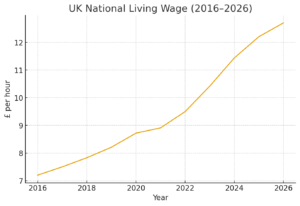
🧠 Final Thoughts
The April 2026 minimum wage increase continues a broader trend of gradual uprating aimed at improving pay for low‑income workers. With disproportionally larger rises for younger workers, the policy is also moving slowly towards reducing age barriers in wage scales. For employees and employers alike, understanding these changes early allows for better planning and preparation ahead of the April implementation date.

0 Comments